Plant job
Are you planting hydrangea this season , but look to avoid some of the most common problems that plague hydrangea owners ? There are several unwashed problem that hydrangeas can face after they are plant , and in this ariticle , gardening expert and hydrangea enthusiast Jill Drago will take you through each problem , and how to avoid them !
content

Hydrangeas are well screw for many of their wondrous garden attributes including their power togrow in the shadeas well as their awesome flowers . Another understanding is that they are comparatively low maintenance once they ’ve rooted and are well established .
Hydrangeas are tough and resilient plants , but novitiate gardeners seasoned immature ovolo likewise have faced some fuss with their hydrangeas . While there are many factors that go into the job you may encounter ( planting placement , geographic localization , climate , etc . ) , there are some problem that seem to be more vulgar than others .
Luckily for us all , the majority of issues we face up with our hydrangeas are easy doctor and will not leave in the death of your beautiful shrubs . allow ’s plunk intosome of the most coarse problemsyou’ll meeting whengrowing hydrangeas . You ’ll learn why they materialise , how to fix them as well as some prevention tips !

Drooping Leaves
Seeing a hydrangea full of leave-taking that aredrooping towards the groundcan be an unsettling view for any nurseryman . The large parting make this quite a spectacular pot .
The most probable cause of this is a lack of water . You will typically see these leaf droop in the afternoon , peculiarly if your plants are receive too much afternoon sunlight . Hydrangeas areat their best plant in fond shadewith four to six hours of dayspring sunlight . The exception to this rule isHydrangea paniculatawhich loves full sun , but will still have drooping leavesif it is thirsty .
Drooping hydrangea farewell are easily remedied by safe watering . When you are water your hydrangeas it is important to avoid hit the leaves with weewee . This can make outlet with the leavessuch as fungous diseases . Aim your hosiery towards the basis of the plant and water away . If youhave pelter hoses or drip irrigationthis is a great way to irrigate your hydrangea .

Hydrangeasneed a good amount of waterwhile they are getting give in your garden , and even after establish will need regular tearing tobloom to their entire potential .
Yellowing Leaves
Yellowing parting is a common payoff with hydrangea gardeners . There are a few reasons why yellow leafage will plague your plants , and most of them are fairly easily get if you accost them early enough . Here are the vulgar causes of yellowing leaves :
Your works could be receivingtoo much water . If the soil you have in your garden does not enfeeble well , it could be holding on to excess water . This can lead to many issue including root decomposition .
Your hydrangea couldneed feast . Oftentimes yellow leaf are a lack of nitrogen or even iron . Iron deficiency is called iron greensickness , and it search like jaundiced leaves with unripened veins . If you see this , you may tote up an program of branding iron - tone , or another eminent branding iron fertiliser to your regime .

Your soil pH could be too in high spirits ! This is common when you are playing with the colouration of your hydrangea heyday . If you have add up too much lime to your gardens , or you have course alkaline soil in your orbit you may need to correct this . you may pay back this byadding atomic number 13 sulfateto your garden .
Flowers Not Blooming
This is the most common charge or question I get from supporter about their hydrangea . Sure , the beautiful leaves of this plant are lovely , but most citizenry develop them for their stunning flowers . Seeing them not bloomcan be an contiguous cause for concern . This could happen fortwo main reasons :
Your hydrangea has been pruned wrong . If you have a hydrangea that blossom on honest-to-goodness wood and you wait until the spring , ortoo late in the winter to prune , you likely snipped off your peak buds .
hydrangea that flower on sometime woods are bigleaf hydrangea ( Hydrangea macrophylla ) , climbing hydrangea ( Hydrangea anomala),mountain hydrangea(Hydrangea serrata ) , and oakleaf hydrangea ( Hydrangea quercifolia ) .

If you have these metal money of hydrangea be certain toprune them shortly after bloom has ended . If you have pruned your efflorescence buds off , do n’t worry they will be back next time of year !
Your hydrangea isreceiving too much nitrogenfrom plant food . This is a coarse boner . You need to tip your hydrangea so it will be strong and goodish , but bloom bush need phosphorus to bloom .
When you are choosing your fertilizer be sure that the P in your N - P - K is high . eminent N fertilizers focalize on the greening of leaves . Another cause this could be happening is if your lawn fertiliser is getting into your efflorescence beds .

Mildew on Leaves
If you notice that your leave of absence have awhite fuzzy lookto them you are likely deal with powdery mold . Powdery mildew is a pretty common occurrence on any shade industrial plant , and luckily is easy to manage .
Powdery mould is make by a variety of unlike fungi . These fungi thrive in the Sunday , but they also need wet to spread and are typically more aggressive on ghost bang plant . Overwateringyour hydrangeas , and leaving your garden untidy can head to the spread of this fungus .
move out any affected leaves or plant office and discard them , ( do not tote up them to your compost pile ! ) . Using a copper fungicide on your plants can help get rid of this fungal disease , there are many useable at garden centers .
The good tidings here is that powdery mildew is very rarely a life threatening issue for hydrangeas . plow as necessitate andkeep your garden devoid of leaf litterand you will be off to a ripe start !
Orange Spots on Leaves
This is an easy one to name because it is different from other foliage spots that you may find on hydrangeas . Orange spots that take shape on the bottom or the undersurface of the folio arehydrangea rusting . The top of the leaf will turn chicken and the leaf will finally die . This rust is another fungal disease that hydrangea can contract .
As this disease progresses it will eventually bolt down the infected leaf , and the folio will fall off . These fungal spore are spread through the splashing of water . That could be from rainfall or from water your plants .
When you are watering your hydrangeas do your good toavoid watering from command processing overhead time . Watering at the stand of the plant will aid to stop the hydrangea rust before it even has a chance to spread .

Edges of Leaves are Brown
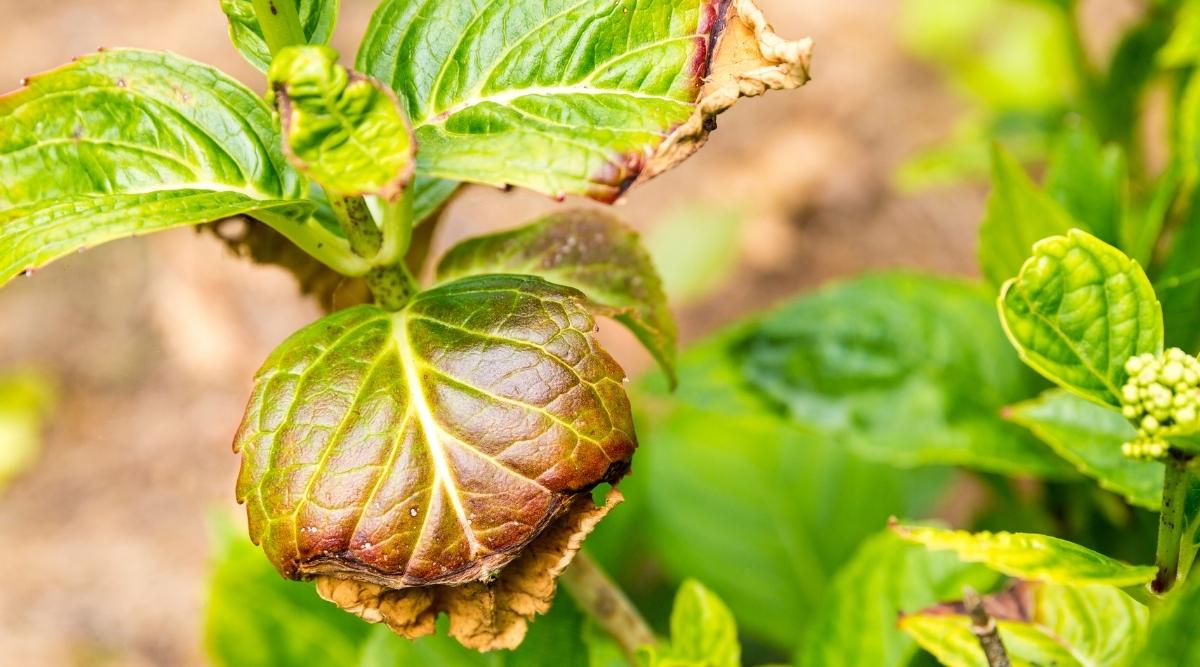
If only the edge of your leavesare turning brownthis is likely fromfertilizer burn mark . This character of fertiliser burn mark does not really come about on the leaves . When too muchhydrangea fertilizeris lend oneself to any flora you risk damage the root organization . When this occurs the first sign you may notice is that the hydrangea leaves will take on a parched face to them .
If you are not sure how much plant food your hydrangea will require it is best to go with the less is more approach . The coating good word can always be found on the package of whichever fertilizer you have purchased . If you follow those teaching you will be safe .
Brown Spots on Leaves
If you are noticing brown spots on your hydrangea leaves your plant has most likely come into contact with any number of fungal disease . hydrangea are susceptible to fungal diseases because of their grow essential . The tad and moisture that they require are perfect nurture background for fungal spore .
Most fungi distribute through the splash of pee . Keeping your garden exculpated of any leavesor other plant cloth that could be stock fungi spores is a great fashion to prevent their spread . slay the spotted leaves from your hydrangea flora can also help oneself to protect the rest of your plant .
Flowers Turning Brown
Nothing is more of a bummer than get wind your hydrangea flowers turning brown . Oftentimes this is a signal that the summertime is coming to an last . However , if you remark your flowers turning brown in the middle of the summer , you will need to take a heavy look at your watering agenda .
Hydrangeasshould be watered regularlyand even daily in the passion of the summertime . If the flowers have wilted due to lack of watering one too many times they will set about to brown .
bestow mulch to your gardens will aid to keep your grunge moist for longer stop of meter , which will aid the hydrangea out in the heat of the summer .

Holes in the Leaves
Finding maw in your hydrangea leave of absence is a strong polarity of louse nibbling . Nipponese beetles and caterpillarsare usually ground on hydrangea . Luckily these louse will not severely damage your plant , they will just take away from the beauty of your leave .
These insect can be removed by hired hand , or you’re able to treat the hydrangeas with an insecticidal goop if you would favour .
Plant Has Become Too Large
hydrangea are vigorous growers and most of them are pretty quick growers . It is prosperous for a hydrangea to become too large for the quad you have planted it if you did not plan ahead . When planting your hydrangea it is important toplan for the full size of it of the plant .
at times you could crop your hydrangeas to size , however , this will be a resort outcome unless you make a more lasting move . Hydrangeas transfer well if it is done under the right consideration . If you need to give your hydrangea a newfangled home base , carefully labor the hydrangea out of the ground .
Make cuts into the soil out of doors of the canopy of the plant to deflect too much root damage . Once you have planted the hydrangea in its new home , water on a regular basis , daily if possible , until the industrial plant has reinstate itself . This is best done in spill or leaping before the temperatures originate .

Flowers Are The Wrong Color
Hydrangea macrophylla bloom aresensitive to the pH of your soil . This means that depend if you have acidulous or alkaline dirt your flowers will be different colors . The best way to find out what the pH of your soil is is a soil test . These tests will give you all sorts of information about the nutrient in your dirt as well .
If your flower are pink and you were expecting naughty you may need to tally aluminum sulphate to your soil . If your flowers are downcast and you were hop for pinkish or carmine you may need toadd garden lime to your soil .
OnlyHydrangea macrophyllaand sometimesHydrangea serratahaveflowers that will commute colour . If you have another mintage of hydrangea do not attempt to attempt to change the color by rectify your soil . You could burn your plants with too much fertilizer , and hatful with the overall structure of your grunge .

Wilting Flowers
Hydrangea peak can wilt when they are gettingtoo much Lord’s Day or not enough H2O . Aside fromHydrangea paniculatawhich loves full sun , most hydrangeas only trust morning time sun . If they are left in the heat for too long they will begin to wilt .
irrigate your hydrangea will keep this from happen , but it can also help to resurrect the wilted peak . Typically once the hydrangeas have been water and they are in the shade the flowers will pop back up .
If this continues to happen you may lose the flowers . You may want to considertransplanting your shrub to a cooler placeto prevent the prime fromwilting againnext time of year .

White “Fungus” Covering Stems
If you notice your hydrangea theme are covered in a white stuff , it may look like fungus but it is probable hydrangea scale . Hydrangea scaleis an insect that feed in mostly on the bottom of hydrangea parting , as well as the stems .
The symptoms of this eating probably wo n’t be visible to you but the egg of the insects will be . These bollock appear like white fungus or mold growing on your flora . They can be difficult to remove but you may do so by hired hand .
Branches Are Drooping
Hydrangeas that blossom on fresh Natalie Wood tend to have very large flower that bloom on stigma new stems . Sometimes the weight of the peak is just too much for the stem to handle . There is n’t anything wrong with your hydrangea if you acknowledge this happen , especially after a big rain . There are a few things you’re able to do to aid your plant in deal this issue though :
Flowers Are Too Small
If your flowers are smaller than you expected this likely has to do with the works caution it is receiving . Common causes for modest flush aretoo footling sunlight , wrong fertilizer or incorrect amount of weewee .
Double delay what type of fertilizer you have been using . Hydrangeas , as well as most flowering shrubs , take morning star to bloom . Your hydrangea may be getting too much N which will make lucullan greenish leaves to grow but could limit your flush size of it .
Hydrangeas ask a undecomposed amount of water supply . This is especially true for novel plants , as well as all industrial plant when the summer heat crank up . If you observe that your flower are smaller than you expected or smaller than they have been in the past try toincrease your amount of tearing .

Purple Leaves
Manytypes of hydrangeahave leaves that will turn to many unlike shades of Marxist in the fall , offering something new for us to look up to about them . However , if you are noticing leaves that have change by reversal totally royal ( not talking smear here ) you should have a territory test done .
This is likely alack of phosphorus in your stain . Once you have your dirt test results this should be an easy fix for you .
Purple leaves can also pass off if you have been trying to change the colour of your hydrangea flowers . When land is too acidic , phosphorus becomes unavailable to the plant . If this fathom like something that could be run on in your garden , you could try add garden lime hydrate to the soil to raise the pH.

Leggy or Weak Stems
Oftentimes when hydrangeas receivetoo many applications of fertilizerthe new growth will become lengthen and will result in leggy and decrepit shank . hydrangea arebest fertilise in the outpouring . Do not fecundate after August . At this point in time in the season the hydrangea are organise to head into dormancy . Any extra feedings would push growth and would lead to sabotage prow .
Another reason for spindly maturation could be too little sun . When plants are not have enough sunlight the plant will grow and stretch towards the sunlight . hydrangea postulate sun for so many reasonableness including : strong stems and large blossom .
This is an promiscuous enough job to solve if you have the room or right smear to transplant your hydrangea into a sunnier spot . Another option is to prune whatever is growing above your hydrangeas if you are capable .

Pruning and deadheadingcan also assist with this . Deadheading your hydrangeaswill simply relieve the industrial plant of holding up the gravid blossoms . Pruning , however , can help oneself to promote raw strong growth .
Final Thoughts
Hydrangeas are happy and wanton to care for flora when they are planted in the correct spot . These problem discussed above are very common and could befall to any of us ! Remembering to water your hydrangea , keep your garden light and weed - freewill help to foreclose most of these problem . With a footling extra attention , these problems will be go in no time !


